TYPOGRAPHY
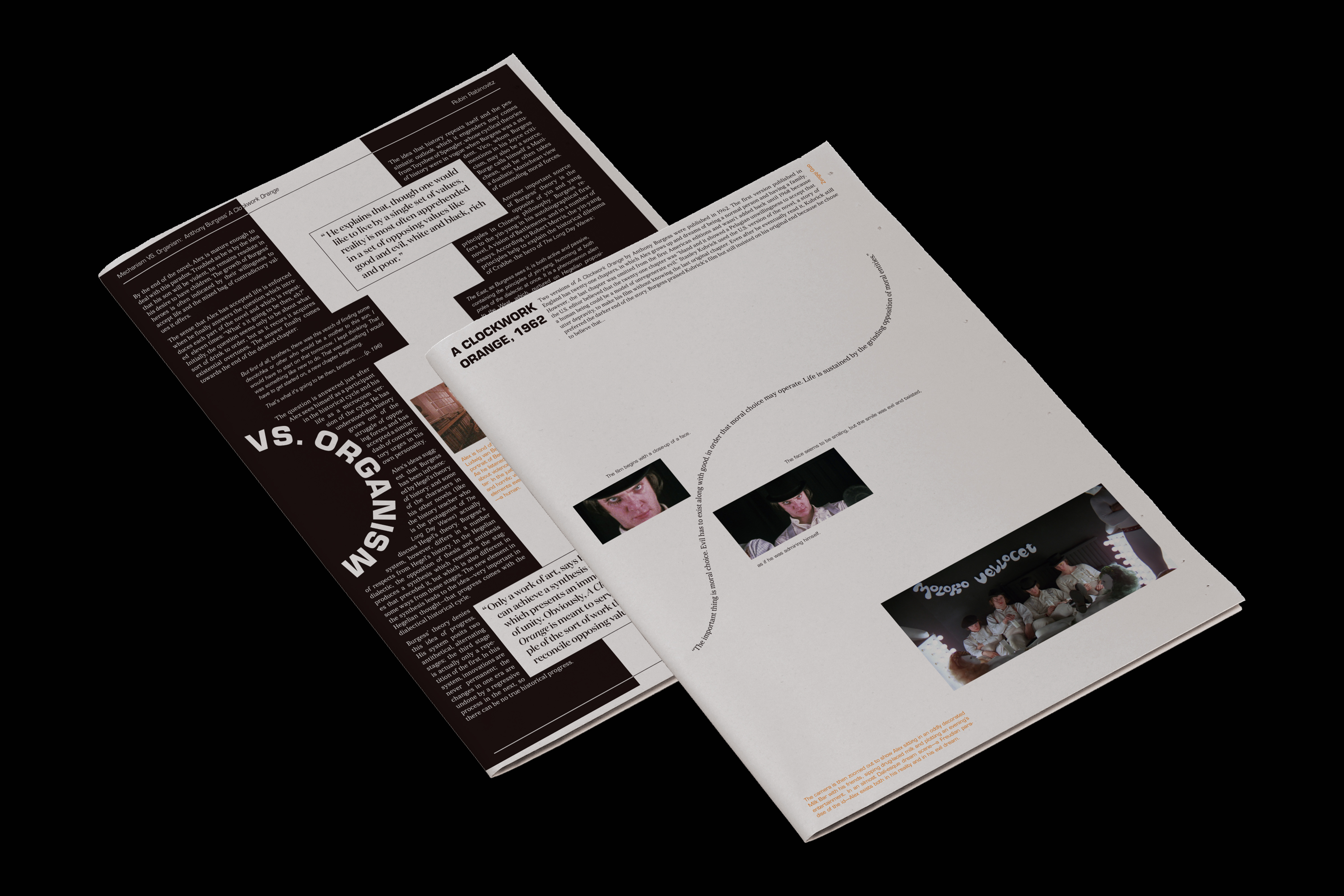
Although the Clockwork Orange movie and novel are very similar in many plots, the different treatments of the ending by the Burgess and Kubrick represent their different opinions on the final judgment of mankind. Kubrick cut out Chapter 21 of the original novel and ended the movie with Chapter 20. This ending implies an inevitable evil, rejection of neutrality, and even contempt for what Burgess insisted on—the importance of the free will. Burgess argues that the necessity of chapter 21 is that it doesn't matter whether they are evil or good, they can coexist, but what matters is freedom and moral choice. It’s the juxtaposition in human nature.
Text face: Selene Text
︎ A Clockwork Orange